
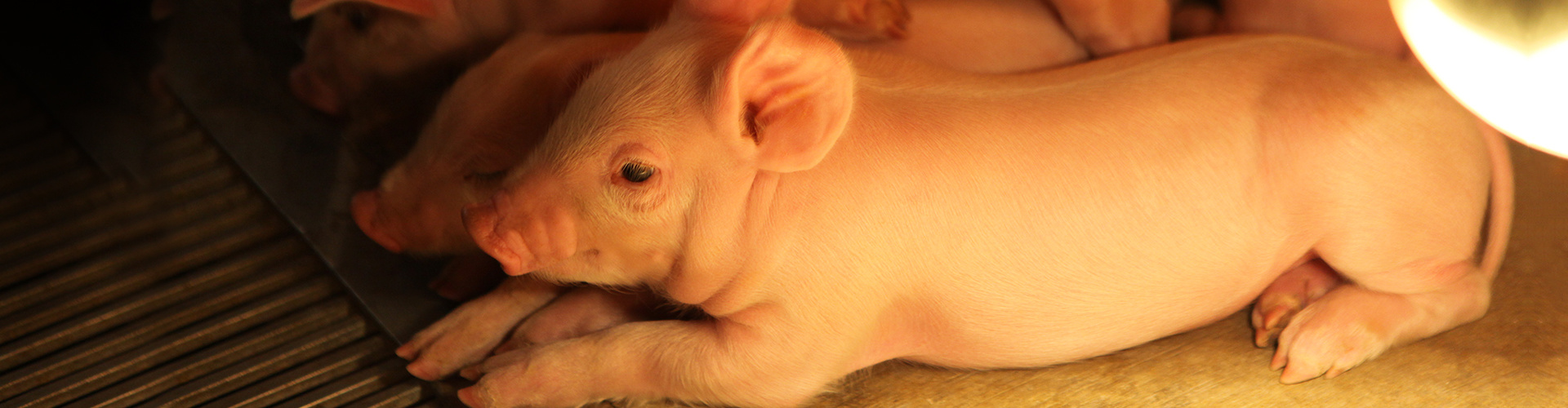
The Effect of Different Feeding Methods of Sweeteners on Weaned Piglets' Preference
Release time:
2015-02-12
Category:
Abstract: This experiment examined the influence of different sweeteners on the preference of weaned piglets, using various feeding methods (different feeder placement arrangements) as the approach and the preference index (experimental feed intake / control group feed intake) as the evaluation criterion. The results showed that feeding piglets with different feeder arrangements had a noticeable impact on their feed consumption.
Keywords: Sweeteners; Feeding Methods; Preference
The perception of taste begins when flavor compounds in food dissolve in saliva, coming into contact with taste receptor cells through the taste pores on the taste buds. At the tips of these receptor cells, specialized proteins—such as taste receptors or pore-forming proteins (ion channels)—detect chemical stimuli in the mouth. By binding to the molecules or ions of flavor compounds, taste cells increase the concentration of positively charged ions inside, effectively neutralizing the electrical charge difference between the cell’s interior and exterior. This process of depolarization triggers the release of neurotransmitters from the taste cells, which then activate nearby synapses, prompting connected neurons to generate electrical signals. These nerve fibers carry the signals all the way to the brain, where the neural center processes them, ultimately giving rise to the perceptions of tastes like sour, salty, bitter, sweet, and umami. While many vertebrates and invertebrates are capable of detecting sugar sources—and indeed exhibit a strong craving for sugary substances—sugar receptors have evolved independently in these two groups of animals.
Due to the differing chemical structures of sweet-tasting compounds, the transduction of sweet-sensation signals follows distinct pathways. The pathway for sweetness transmission within taste cells is as follows: sugar → taste cell membrane receptor → GS protein → adenylate cyclase → cAMP → potassium ion conductance → receptor potential → sweet taste perception. Thus, although feeding behavior is an animal's instinctive response, it is actually regulated by internal neuroendocrine and humoral factors, involving complex interactions among the nervous system, endocrine system, and various bioactive molecules. Ultimately, eating behavior is a highly controlled activity governed by the neural center.
There are many factors that regulate food intake, but hypothalamic neurons ultimately modulate appetite through two distinct pathways after integrating diverse signals: the orexigenic peptide neurons and the anorexigenic peptide neurons. Additionally, the glycolipid metabolism and free radical levels in hypothalamic cells play a crucial role in controlling feeding behavior (Jiang Qingyan, 2012).
A compound sweetener refers to a type of sweetener formulated by combining two or more natural or artificially synthesized sweet-tasting substances with synergists and flavor enhancers. This approach leverages the advantages of individual sweeteners while mitigating their drawbacks, ultimately delivering a well-rounded sweetness experience. Compound technology capitalizes on the synergistic interactions among various sweetening agents, as well as the physiological characteristics of taste perception, to achieve superior sweetening effects.
The free-choice feeding experiment involves providing experimental animals with two or more different types of test feed simultaneously over a defined trial period, allowing them to freely select and consume the food they prefer. Under specific conditions, animals are given the opportunity to choose the feed that best suits their individual tastes, enabling researchers to determine their preferences for various feed flavorants.
1 Materials and Methods
1.1 Experimental Design
Under the same experimental conditions, three different feeding methods (with varying feeder placements) were used simultaneously to provide piglets with diets formulated using two sweeteners of equal value, allowing them complete freedom to consume the feed. The animals' preferences for the diets containing different sweeteners were assessed by measuring a preference index, enabling us to evaluate their liking and appetite-stimulating effects as well as the extent to which the feeding method influenced these preferences. The basal diet was a corn-soybean meal-based formulation.
First-round experiment: Two weaned piglet feeders of identical size and shape were placed side by side at the front of the piglet nursery, with consistent spacing between each feeder. Piglets were individually marked with unique numbers—1, 2, 3, 4, 5, and 6—using special marker ink that is easily identifiable both by the naked eye and through monitoring equipment. All piglets were housed in pens measuring 3.25 m × 1.90 m, and a surveillance camera was installed directly above each pen, ensuring full coverage of the entire housing area. The trial lasted a total of 8 days, including a 1-day adaptation period.
Round 2 of the trial: At the center of the pen, near the waterer, three identical cylindrical feeders—identical in diameter, color, and shape—were placed at the vertices of an equilateral triangle and securely fixed in place. Each feeder was clearly marked with a unique number, easily recognizable both by the naked eye and through monitoring equipment. The piglets (one per pig) were individually numbered 1, 2, 3, 4, 5, and 6. Before the formal trial began, a 1-day pre-feeding period was conducted to prevent any preference among the piglets for specific feeders. During this pre-feeding phase, all three feeders were filled with the same daily ration. Once the trial officially started, the control diet and the experimental diet were introduced into the corresponding feeders, respectively. Throughout the entire trial period—lasting a total of 8 days, including the 1-day pre-feeding phase—piglets had free access to both feed and water.
Round 3 of the experiment: Four feeders were placed inside the same pig house, which measures 4.5 meters in length and 2.4 meters in width. A camera monitored the entire area continuously. At the same time, pigs were fed three different types of feed—A, B, C, and D—while the control group receiving Feed A was further divided into A1 and A0. Each feeder received its designated feed daily, and the feeding process was closely observed to ensure that some leftover feed remained in each feeder at all times. Pig farm management followed standard procedures, including free access to feed and water, as well as routine immunization according to the farm’s regular schedule. Throughout the trial, the growth and feeding behavior of the pigs were carefully observed and recorded, with precise documentation of the amount of feed provided. The experiment lasted a total of 8 days, including a 1-day pre-feeding period.
1.2 Experimental Animals and Grouping
Round 1 of the experiment: The study used 64 healthy, 28-day-old weaned piglets weighing approximately 8.21 ± 1 kg, all from DLY three-way crossbred (commercial) litters with similar parity at weaning. The piglets were randomly divided into four dietary groups, with four replicates per group—each replicate consisting of six pigs. Two control groups were included: a negative control group (blank group) designated as T0 and a positive control group (blank group) designated as T1. The experimental groups were TA and TB. Piglets were assigned to these groups using a pairwise matching design: TA paired with TB, T0 paired with TA, T0 paired with TB, and T0 paired with T1, allowing for direct comparisons (as shown in Table 1).
Second-round trial: Forty-eight healthy, weaned DLY three-way cross (commercial) piglets, each weighing approximately 8.36 ± 0.94 kg and with similar age and parity, were selected. Piglets of comparable size and weight were randomly assigned to eight pens, with six piglets per pen—each pen serving as a replicate (six pigs per replicate).
The experiment was divided into a control group and two groups treated with different sweeteners. The control feeding trough received the basal diet, while the experimental troughs were fed diets supplemented with various sweeteners added to the basal ration. Each day, ensure that there is leftover feed in every trough. On days 2, 3, 4, 5, and beyond, weigh the remaining feed from each trough at 8:30 a.m., then replenish each trough with fresh feed. Additionally, rotate the placement of each type of feed clockwise every day to prevent piglets from developing positional preferences that could skew the experimental results.
Round 3 Experiment: Forty-eight healthy weaned commercial piglets, each weighing approximately 9.14 kg ± 0.28 kg and roughly similar in age and parity, were randomly assigned to 8 pens, with each pen serving as one replicate. Each replicate consisted of 6 pigs.
1.3 Measurement Indicators
Calculate the preference index based on feed intake:
Note: A preference index > 50% indicates that the trial shows a preference.
2 Results and Analysis
As shown in Table 1, the preference scores of the four experimental groups were significantly higher than those of the control group. Specifically, within-group comparisons revealed that TA showed greater preference than T0, and TB exhibited higher preference than T0 when paired with a sweetened diet—both surpassing the blank control group. When comparing preferences between TA and TB groups, pigs seemed slightly more inclined toward sweet B than sweet A, though this difference was not statistically significant, suggesting that piglets may have a slight preference for sweet B.
From Table 2 and Table 3, we can see that the TB group had the highest feed intake among the three groups, with the sweetener groups showing greater preference than the control group—and specifically, the sweetener B group exhibited higher preference than the sweetener A group.
As shown in Table 4, the preference scores of the four experimental groups were significantly higher than those of the control group. Specifically, within these groups, TA showed greater preference for the diet compared to T0, and TB exhibited even stronger preference when paired with a sweetened diet—both surpassing the blank control group. When comparing preferences between TA and TB groups, pigs seemed slightly more inclined toward sweet B than sweet A; however, this difference was not statistically significant, suggesting that piglets may actually prefer sweet B over sweet A.
3 Conclusion
Based on the analysis of the results from the three rounds of experiments, the three different feeding methods yielded consistent outcomes: the sweetener groups showed higher preference than the control group, with Sweetener B eliciting greater preference than Sweetener A. However, when considering the overall experimental results, the first-round method achieved significantly higher feed intake compared to the other two rounds. Moreover, in terms of scientific validity and ease of implementation, the first-round approach proved to be more logical and practical. Thus, our findings reveal that the placement of feeders at different locations does influence the feeding preferences of weaned piglets. Among the three feeding methods tested, positioning two feeders per pen, rotating their positions daily, and pairing them in a systematic manner emerged as the most scientifically sound, practical, and easily executable approach.
(Author: Yu Miao, DDC Technical Service Department; All rights reserved. Please credit the source when reprinting.)
Hot news
Website
Add: DadHank (Chengdu) Biotech Corp. No.123 Rongtai Avenue, National Cross-Strait Technology Industry Development Park, Chengdu, China, P.C:611130
Tel:+86-028-82633801